An SUV can look capable in Japan but become an expensive mistake if it struggles with South Sudan’s roads or needs a rare replacement part. The right choice depends on your route, vehicle condition, drivetrain and repair network. In this guide, you’ll compare four Japanese SUVs by clearance, durability, parts support and buyer fit.
Quick Answer
- The Toyota Land Cruiser Prado is the strongest choice for demanding routes, with 220 mm of published clearance and full-time 4WD.
- The Nissan X-Trail offers 205 mm in the petrol T32 specification, with seven seats on selected versions.
- Toyota RAV4 clearance is variant-specific, so verify the exact model code and official Japanese specification before comparing figures.
- Toyota-related parts support was easier to document in the sources reviewed, but every part still needs model and code verification.
What Should You Look for in an SUV for South Sudan?
In 2025, the World Bank’s Connecting for Growth: South Sudan Transport Infrastructure and Logistics Diagnostics described a road network of about 90,200 kilometres, with only around 300 kilometres sealed. Many gravel and earth roads can become impassable during the rainy season, so clearance and repairability matter.
Ground clearance means the distance between the ground and the vehicle’s lowest point. More clearance helps with ruts, stones, potholes and uneven tracks, but it doesn’t turn a two-wheel-drive crossover into a 4WD.
Four-wheel drive sends power to all four wheels, depending on the system and driving mode. A CVT is a continuously variable transmission, common in the X-Trail, RAV4 and Outlander. An auction grade is the Japanese auction’s overall condition assessment, not a guarantee against every mechanical issue.
Tyres, suspension condition, vehicle load, wheelbase and approach angle also affect rough-road ability. A clean SUV with 200 mm of clearance can be a better buy than a neglected vehicle with 220 mm.
The practical question isn’t “Which SUV is tallest?” It’s “Which SUV can your local mechanic diagnose, and which parts can you source for this exact engine and gearbox?”
At-a-Glance Comparison
| SUV |
Clearance reference |
Drivetrain to verify |
Parts confidence |
Best suited to |
Main caution |
| Toyota Land Cruiser Prado |
220 mm |
Full-time 4WD reference |
Higher visible evidence |
Difficult routes and heavy loads |
Fuel, size and repair cost |
| Nissan X-Trail T32 |
205 mm petrol |
4WD on selected unit |
Verify locally for the exact configuration |
Family and mixed-road use |
CVT and code verification |
| Toyota RAV4 |
Variant-specific; verify exact model code |
4WD on selected unit |
Toyota-related support easier to document in the sources reviewed |
Juba and maintained gravel roads |
Not a heavy-duty 4WD |
| Mitsubishi Outlander |
Around 190 mm for older PHEV GG*W |
4WD on selected unit |
Verify locally for the exact configuration |
Family use with confirmed support |
Generation and powertrain complexity |
The three vehicle records used below show a 2014 X-Trail with 83,400 kilometres and grade 4, a 2019 RAV4 with 104,300 kilometres and grade 3.5, and a 2018 Outlander with 82,000 kilometres and grade 4. The exact reports and specifications should always be checked on the individual vehicle page.
Ground-clearance comparison
| Model or variant |
Published minimum clearance |
| Toyota Land Cruiser Prado J150 |
220 mm |
| Nissan X-Trail T32 petrol |
205 mm |
| Toyota RAV4, exact variant to verify |
Check official specification |
| Mitsubishi Outlander PHEV GG*W reference |
190 mm |
| Subaru Forester, current Japanese specification |
220 mm |
These are manufacturer figures, not a complete off-road score. Toyota states that fuel, occupants and luggage can change the practical clearance measurement in its ground-clearance guidance.
Is the Toyota Land Cruiser Prado Best for the Hardest Routes?
The Toyota Land Cruiser Prado is the strongest general recommendation for difficult routes because the 2021 Toyota Japan Prado specification lists 220 mm of minimum ground clearance and full-time 4WD. That combination gives it a clear advantage on ruts, rough tracks and loaded journeys.
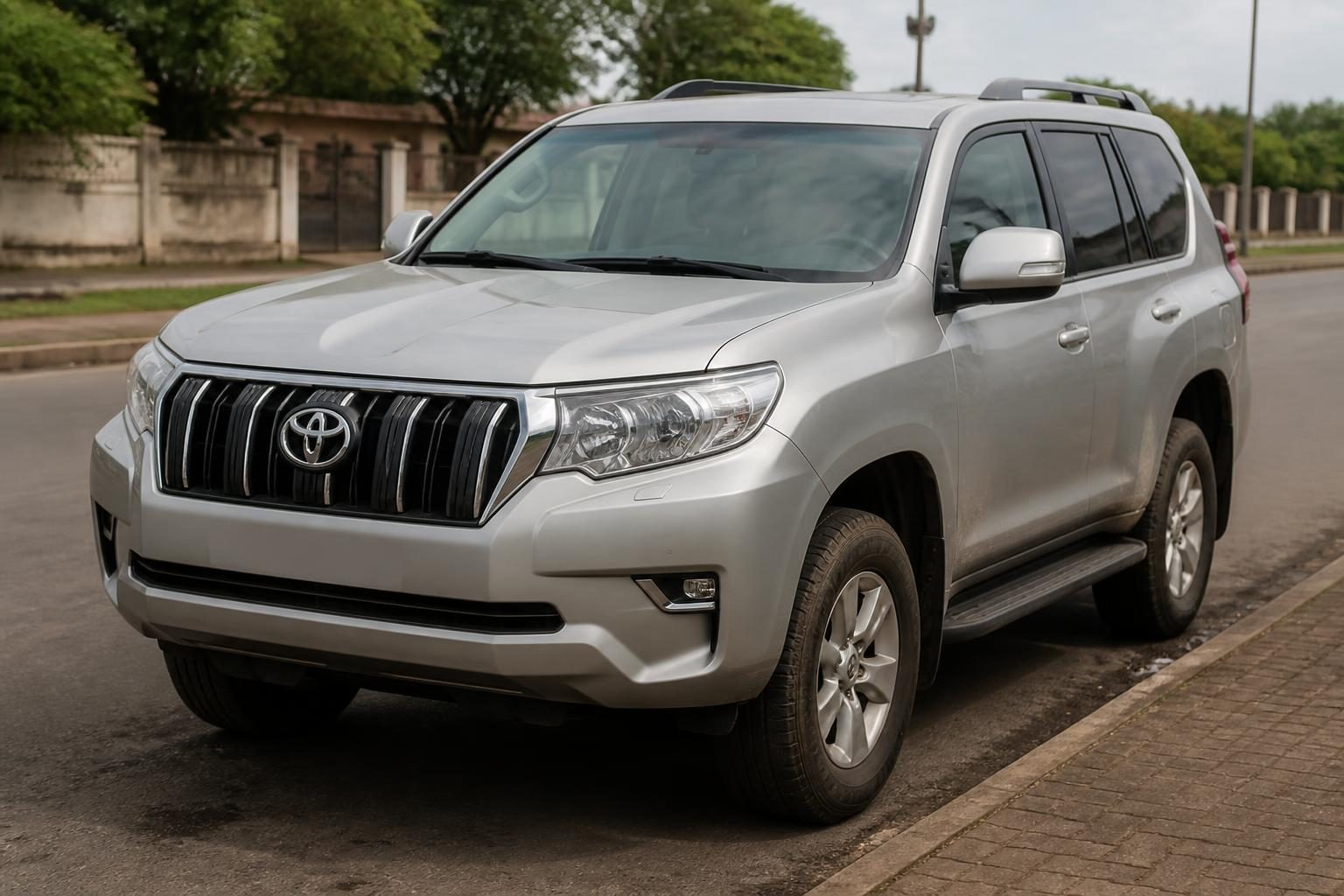 2018 Toyota Land Cruiser Prado
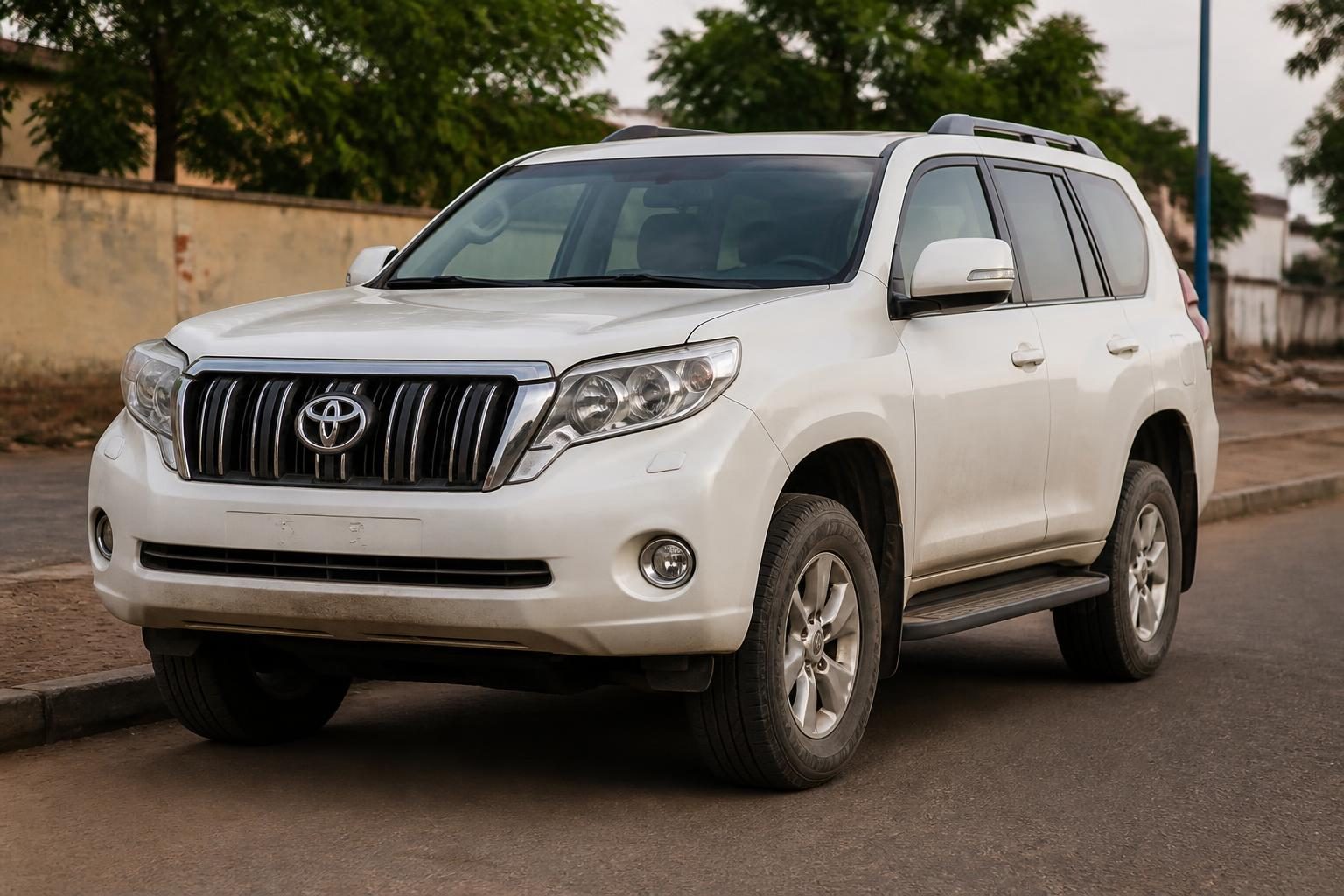 2018 Toyota Land Cruiser Prado
The Prado’s larger body, more substantial chassis and four-wheel-drive hardware suit remote travel, business journeys and heavy loads. Japanese-market examples can use either petrol or diesel engines, so the exact engine code matters. A diesel variant may suit loaded long-distance work, but diesel is not automatically the better choice if local parts and diagnostic support are limited.
In 2025, a South Sudan NGO Forum procurement notice for the Carter Center requested Toyota Land Cruiser spare parts in Juba. Some Juba suppliers also advertise Toyota parts, but those commercial listings are narrow local-market signals, not proof that every part is immediately available.
The trade-off is cost. The Prado is larger in town, uses more fuel and can cost more to repair. If you mainly drive maintained roads around Juba, it may be more vehicle than you need.
Is the Nissan X-Trail the Best Balanced Family SUV?
The Nissan X-Trail makes sense for families needing a manageable SUV with seven seats, 4WD and useful gravel-road clearance. In 2022, the Nissan Japan T32 X-Trail ground-clearance FAQ listed 205 mm for petrol versions and 200 mm for later hybrids.
The 2014 vehicle record is an NT32 with a 2.0-litre MR20DD inline-four petrol engine, automatic transmission, 4WD, seven seats, 83,400 kilometres and auction grade 4. Its 4WD system and 205 mm petrol clearance suit potholes, gravel and moderate ruts, but this remains a family soft-roader rather than a Prado replacement.
The CVT deserves close attention before payment. Check service history, take unusual hesitation or shuddering seriously, and match replacement parts to the MR20DD engine and exact transmission. Don’t assume Nissan parts support without evidence for this exact configuration; confirm the part number, supplier and expected lead time before choosing the vehicle.
According to the Nissan Japan T32 specification FAQ, the petrol X-Trail has 205 mm of clearance, while later hybrids have 200 mm. That small difference matters less than the vehicle’s suspension condition, tyres, CVT health and the route it must handle.
Nissan SUVs and family vehicles
Toyota RAV4: Best Everyday SUV Around Juba
The Toyota RAV4 is probably the best fit for buyers who spend most of their time around Juba but still face potholes, gravel and uneven roads. Clearance figures vary by exact Japanese variant, so check the model code and official specification alongside the selected record’s 4WD system.
This 2019 RAV4 uses the AXAH54 model code, a 2.5-litre A25A-FXS inline-four hybrid system, automatic CVT and 4WD. It has five seats, 104,300 kilometres and auction grade 3.5. The size is easier to manage than a Prado, and the hybrid system may suit stop-start urban driving.
The RAV4’s main advantage is the balance between everyday usability and Toyota parts familiarity. Its main limitation is capability. It isn’t the right tool for severe mud, very heavy loads or remote routes where recovery support is limited.
Before payment, confirm battery condition, inverter operation, hybrid-system diagnostics and replacement-component supply. Don’t use a Japanese test-cycle figure to predict local fuel costs without a local fuel price and calculation method.
Toyota’s 2019 RAV4 specification should be checked against the exact model code because clearance varies by variant and published sources report different figures. The RAV4’s practical strengths remain its 4WD option, moderate size and Toyota-related parts support that was easier to document in the sources reviewed.
Toyota model specifications
Mitsubishi Outlander: A Conditional Family Option
The Mitsubishi Outlander deserves consideration when the exact vehicle has strong inspection results and confirmed parts support. Mitsubishi’s 2018 Outlander PHEV GG*W specification lists 190 mm of minimum ground clearance.
The selected record is a 2018 petrol Outlander with a 2.4-litre 4B12 four-cylinder engine, automatic CVT, 4WD, five seats, 82,000 kilometres and auction grade 4. The stock record identifies it as petrol, not PHEV, so confirm the chassis code and full specification from the auction sheet before applying the 190 mm PHEV figure.
That distinction matters. A PHEV brings battery, charging and hybrid-diagnostic questions, while the petrol vehicle has a different parts profile. Treat Mitsubishi parts availability as something to verify, not an assumption: confirm part numbers, gearbox details, a named supplier and lead times before choosing it for remote travel.
The Outlander offers useful family space and 4WD, but it is not the safest choice for buyers who want the simplest possible local repairs. A suitable petrol example can make sense. A PHEV needs a much clearer support plan.
The Mitsubishi Motors Japan specification page lists 190 mm for the older GG*W PHEV generation. The figure is useful for comparison, but exact generation, fuel type and variant must come first.
Which SUV Fits Your Route and Repair Network?
In 2025, the World Bank transport diagnostic reported that road transport carries more than 95% of passenger and freight movement in South Sudan. Your route therefore matters more than a vehicle’s badge or touchscreen.
- Mostly Juba, potholes and maintained gravel: Toyota RAV4.
- Family use with occasional regional travel: Nissan X-Trail.
- Heavy loads, remote travel or difficult wet-season routes: Toyota Land Cruiser Prado.
- Family SUV with confirmed petrol support: Mitsubishi Outlander.
- Subaru Forester: a conditional option only when parts and specialist knowledge are confirmed. Subaru’s current Japanese specification lists 220 mm of clearance, but that does not prove used-stock suitability or local support.
Parts availability depends on more than the badge. The engine code, generation, gearbox, drivetrain and hybrid system can decide whether a repair is straightforward or requires regional sourcing.
Before payment, check:
- The auction sheet, including written condition notes.
- The in-house inspection report.
- Underbody impact, rust and fluid leaks.
- Shock absorbers, bushes and steering components.
- Tyre size, tread and replacement practicality.
- Cooling-system condition.
- Engine code, gearbox and drivetrain.
- Battery, inverter and diagnostic support for hybrid vehicles.
- Common service-part supply in Juba, Kenya or Japan.
Ground clearance also changes with fuel, occupants and luggage. Toyota explains this in its vehicle clearance guidance, so don’t judge a vehicle from one number alone.
Toyota SUVs available from Japan
How Can the Japan-to-South Sudan Process Reduce Uncertainty?
In 2026, the published South Sudan buying guidance describes an estimated 24–36 days from Japan to Mombasa, followed by road transport into South Sudan. Weekly sailings can help with planning, but shipping time remains an estimate rather than a promise.
The key is evidence before payment. Review the auction sheet, inspection notes, drivetrain, engine code and parts plan before judging whether a vehicle suits your route.
In the final service paragraph, Carbarn explains that it owns and inspects the vehicles in Japan, provides an official Japanese auction sheet and an in-house inspection report before payment, and includes mandatory JEVIC pre-shipment inspection for South Sudan. Vehicles travel by RoRo on weekly MSC departures to Mombasa, then by road into South Sudan, with invoices, bill of lading, certificates and vessel tracking handled through the Japan-based dashboard. Vehicle and shipping costs are separate from duty, tax, customs clearance, arrival costs, registration and licensing. Tax treatment depends on the applicable financial year, vehicle classification and valuation rules, so check the current South Sudan import rules rather than treating an older 20% sales-tax description as a universal current VAT rule. EAA may inspect on arrival depending on the region. You can browse used SUVs or read how to buy.