US$701m: that is what South Sudan's formal imports from Uganda, Kenya and Rwanda came to in 2025, or US$700,877,825 to the dollar. The figure is Table 46 of the NCTTCA Northern Corridor Transport Observatory Report, 21st edition, which reports 2025 data and was checked on 24 November 2026. Formal imports are goods recorded through official customs channels, so the number leaves out trade that crosses the border unrecorded.
Quick Answer
- The total: US$701m in 2025, most of it from Uganda, then Kenya, with a small share from Rwanda, according to Table 46 of the NCTTCA Northern Corridor Transport Observatory Report, 21st edition.
- What it covers: formal trade in all goods from those three partners only.
- What it leaves out: vehicles as a category, imports from Japan, informal trade, prices, taxes and transit times.
- Why it matters: South Sudan has no coast, so goods reach it through neighbouring states' ports and roads.
- Next step for a car buyer: read how the buying process works before you commit to anything.
The figure, country by country
Uganda supplied the bulk of the US$701m, Kenya most of the rest, and Rwanda a small remainder. The table below shows the three partners and the total in US$ millions, as supplied by the NCTTCA report. The shares beneath it are our own arithmetic, not report figures.
| Partner |
Formal imports into South Sudan, 2025 (US$ millions) |
| Uganda |
523.7 |
| Kenya |
166.6 |
| Rwanda |
10.6 |
| Total |
700.9 (US$700,877,825 exact) |
Source: NCTTCA Northern Corridor Transport Observatory Report, 21st edition, Table 46, 2025 data.
On our calculation, Uganda accounts for about three-quarters of the total and Kenya roughly a quarter. We've rounded on purpose, because the report gives dollar values, not percentages.
What does the US$701m cover, and what does it leave out?
The figure counts formal imports of all goods from three partners in one year.
It is not:
- A figure for vehicles, or for any single product category.
- A figure for imports from Japan or any country outside the three.
- South Sudan's total imports, since other trading partners aren't counted.
- Informal trade, which by definition isn't recorded.
- Any statement about prices, taxes, exchange rates or how long goods take to arrive.
Why do three regional trading partners matter to a landlocked buyer?
South Sudan has no coastline, so goods arrive through neighbouring countries' ports, roads and border posts.
A trade "corridor" is a recognised route of ports, roads, rail and border crossings that moves cargo between a coast and the countries behind it. The Northern Corridor is the route running inland from the port of Mombasa in Kenya, and it serves several land-linked states, South Sudan among them. Uganda sits along that route. That may help explain why so much recorded trade comes from there, though the report doesn't say so.
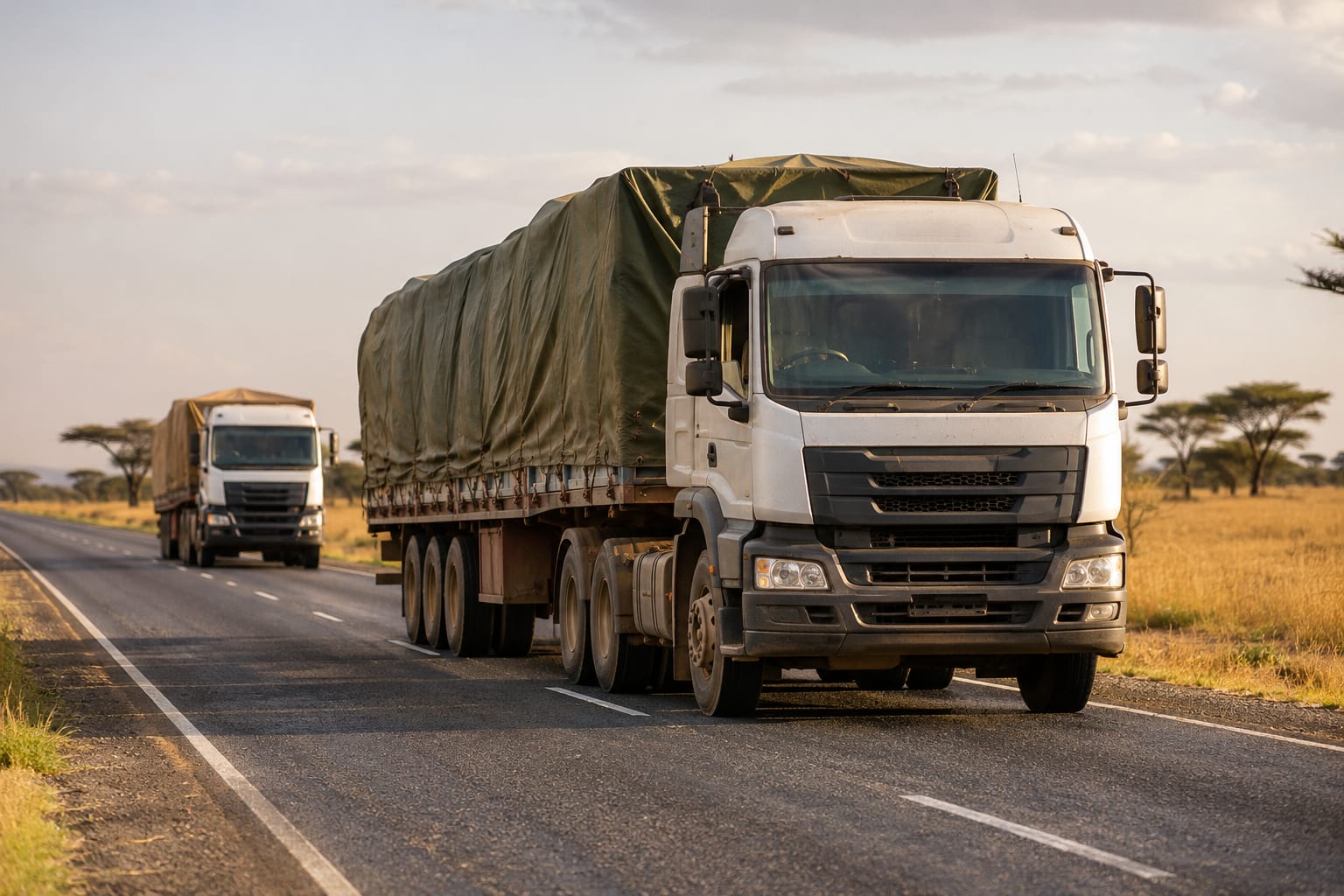 Illustration: Freight trucks carry covered loads along a highway through open grassland.
What does this mean if you're buying a vehicle?
A car bought from Japan follows the same corridor logic as the goods in Table 46. It ships by sea to Mombasa in Kenya, then travels by road into South Sudan.
Duty is calculated on the car's CIF value (cost, insurance and freight), and customs practice can differ between clearing towns such as Juba and Yei. We're not naming any rate, so check the current import rules and regulations before you budget.
If you're importing a car to South Sudan via Mombasa, the landed cost, meaning the full amount you pay by the time the car is cleared and legal to drive, has several parts beyond the listed price:
- Customs duty, calculated on the car's CIF value.
- Clearance costs, including a clearing agent's fee.
- Any arrival inspection, and registration and licensing.
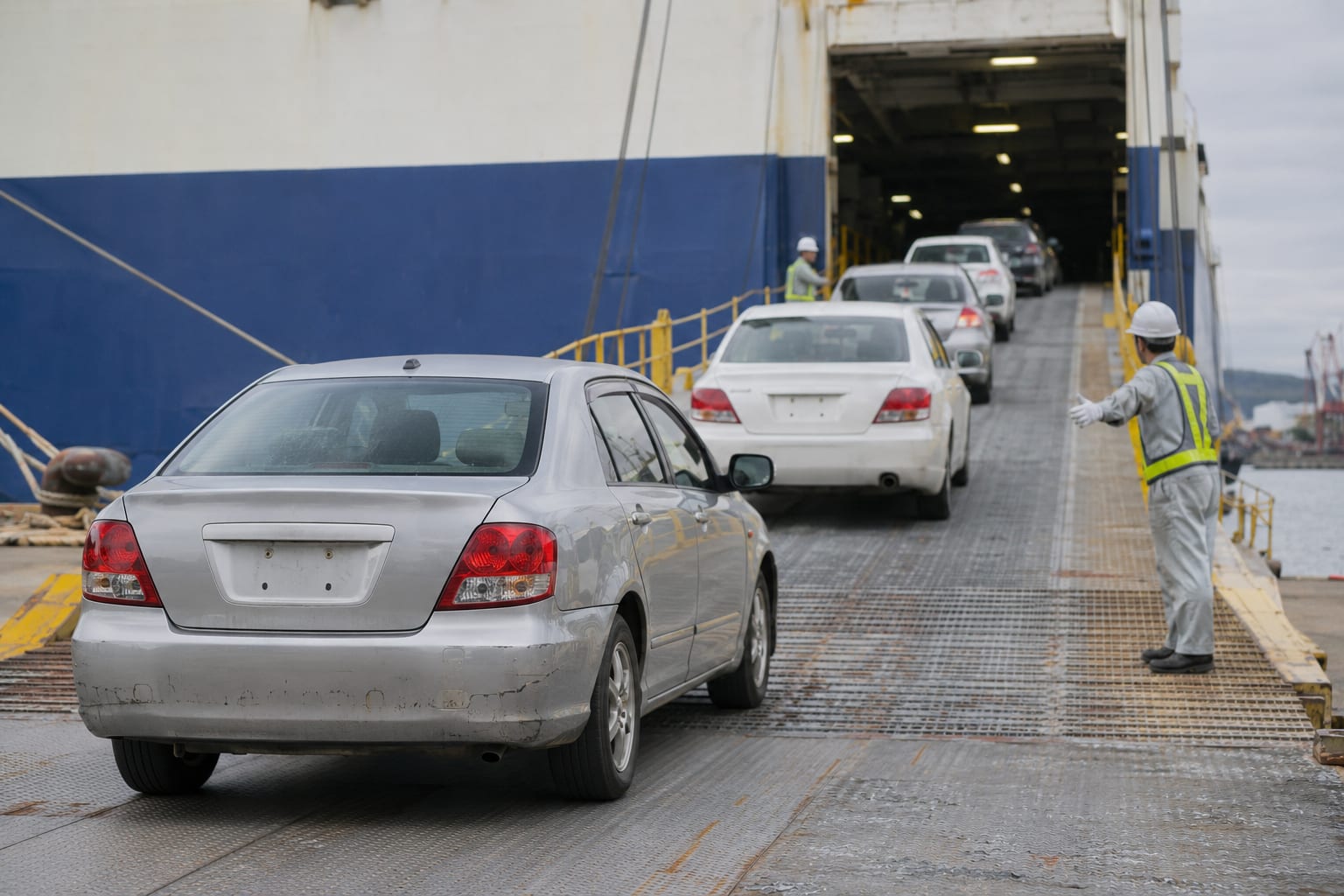 Illustration: Used passenger cars queue on a loading ramp leading into a vehicle carrier ship.
Customs clearance is the buyer's job, or that of a clearing agent who handles border paperwork and payments for you. Budget for these costs separately, and treat the trade figure as background, not a price guide.
Where does Carbarn fit?
Carbarn South Sudan sells used Japanese vehicles that it owns and inspects in Japan, with no middlemen in between. Each vehicle comes with two reports before you pay: the official Japanese auction sheet and an in-house Carbarn inspector report.
Your car is booked on the next available roll-on roll-off vessel to Mombasa, then continues by road.
Duty, tax, clearance, registration and licensing remain the buyer's, and duty is calculated on the car's CIF value. On arrival, the EAA may carry out a roadworthiness inspection during clearance, depending on the region. The full step-by-step process, from choosing a car to tracking the ship, is set out in how buying from Japan works.
Method and sources
What this does not show
The US$701m is a one-year count of recorded goods from three partners. It doesn't split by product, so it says nothing about how many vehicles crossed, or what they were worth.