Fuel costs matter, but the most economical hybrid on paper may not suit South Sudanese roads. A low hatchback can work well in Juba traffic, yet struggle with deep ruts, seasonal mud or heavy loads outside the capital. In 2026, selected Toyota Yaris variants record up to 36.0 km/L under Japan’s WLTC test, although real consumption varies (Toyota Yaris specifications, 2026). This guide ranks ten Japanese hybrids by economy, drivetrain familiarity, road fit, space and inspection needs.
Quick Answer
- The Toyota Prius is the strongest overall choice for Juba and paved inter-town routes.
- The Corolla Fielder offers the best balance of fuel economy, cargo space and daily practicality.
- The Aqua, Yaris and Honda Fit suit city driving, but need caution on rough roads.
- The Sienta and Noah make more sense for families and group transport.
- Official figures are comparisons, not guarantees. Battery, tyres, suspension and underbody condition still matter most.
What Makes a Hybrid Suitable for South Sudan?
The right hybrid combines fuel savings with a drivetrain and body that match your roads. In 2026, Nissan lists 28.4 km/L WLTC for a relevant Note e-POWER 2WD specification (Nissan Note specifications, 2026). That figure comes from a controlled Japanese test, not South Sudanese traffic.
A full hybrid uses petrol, electric assistance and regenerative braking. It does not need an external charger. Nissan e-POWER also uses petrol, but the engine generates electricity while electric motors drive the car. Plug-in hybrids are different because they need an outside power source.
Road fit matters just as much as fuel economy. Clearance, tyre sidewalls, suspension condition and underbody protection can decide whether a car remains practical after the rainy season. For deeper specification checks, use the planned Japanese vehicle specifications database.
Ten Hybrid Cars Compared
In 2026, selected Yaris variants record up to 36.0 km/L WLTC, while Toyota Noah figures vary by grade, seating configuration, drivetrain and model year (Toyota Noah specifications, 2026; Toyota Yaris specifications, 2026). The ranking below balances economy with space, road suitability and service practicality.
| Rank |
Model |
Best fit |
Official figure |
Main caution |
| 1 |
Toyota Prius |
Juba and paved roads |
37.2 km/L JC08 for most 2WD grades |
Low stance |
| 2 |
Toyota Corolla Fielder |
Family and business use |
33.0 km/L JC08 for the 2014 hybrid |
Not a 4x4 |
| 3 |
Toyota Aqua |
Compact city driving |
Up to 34.6 km/L WLTC |
Limited space |
| 4 |
Honda Fit |
Flexible small-car use |
Grade-specific |
Confirm generation |
| 5 |
Toyota Sienta |
Compact family transport |
27.2 km/L JC08 for the 2016 hybrid |
More weight |
| 6 |
Toyota Corolla Axio |
Compact sedan use |
About 33.8 km/L JC08 for the 2015 hybrid |
Less cargo flexibility |
| 7 |
Nissan Note |
City driving |
28.4 km/L WLTC |
Different system |
| 8 |
Toyota Yaris |
Maximum official economy |
Up to 36.0 km/L WLTC |
Small and low |
| 9 |
Honda Shuttle |
Cargo and family use |
25.2 km/L WLTC |
Older model |
| 10 |
Toyota Noah |
Seven-seat transport |
Grade-specific; verify the exact 2024 figure |
Larger and heavier |
Which Ten Hybrid Cars Are Best for South Sudan?
In 2026, the supplied vehicle records include odometer readings as high as 131,000 kilometres, but not every page can be independently verified. That spread shows why the ranking is an editorial guide, not proof that every example has the same reliability. The final choice should match the exact model code, grade, mileage and inspection reports.
1. Toyota Prius Hybrid, best overall
The 2016 Toyota Prius Hybrid is a strong choice for Juba traffic and paved inter-town travel. Its mature petrol-electric system, hatchback body and five-seat layout provide a useful balance of economy and practicality.
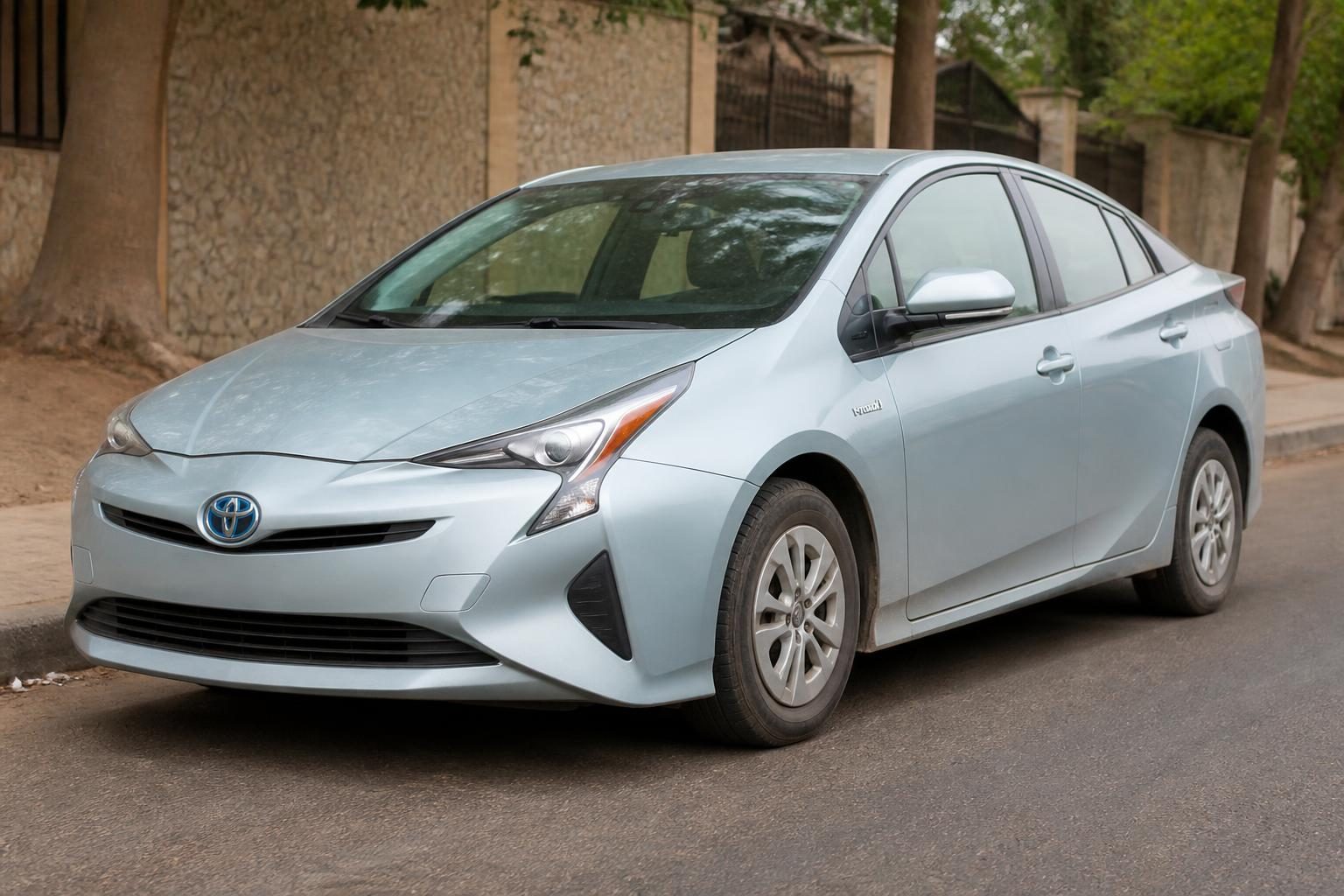 2016 Toyota Prius
In the 2026 stock record, this ZVW50 is a grade 4.5 hybrid with 44,000 kilometres. Toyota’s 2016 launch figures were 40.8 km/L JC08 for the E grade and 37.2 km/L JC08 for other 2WD grades (Toyota 2016 Prius launch announcement, 2016; Toyota Prius specifications, 2023). JC08 figures are not directly comparable with later WLTC results. Skip it if your daily route includes severe ruts or flood-damaged roads.
2. Toyota Corolla Fielder Hybrid, best all-round wagon
The 2014 Toyota Corolla Fielder Hybrid suits families, small businesses and buyers carrying luggage or equipment. Its wagon body is more useful than a sedan, without becoming as large as a people-mover.
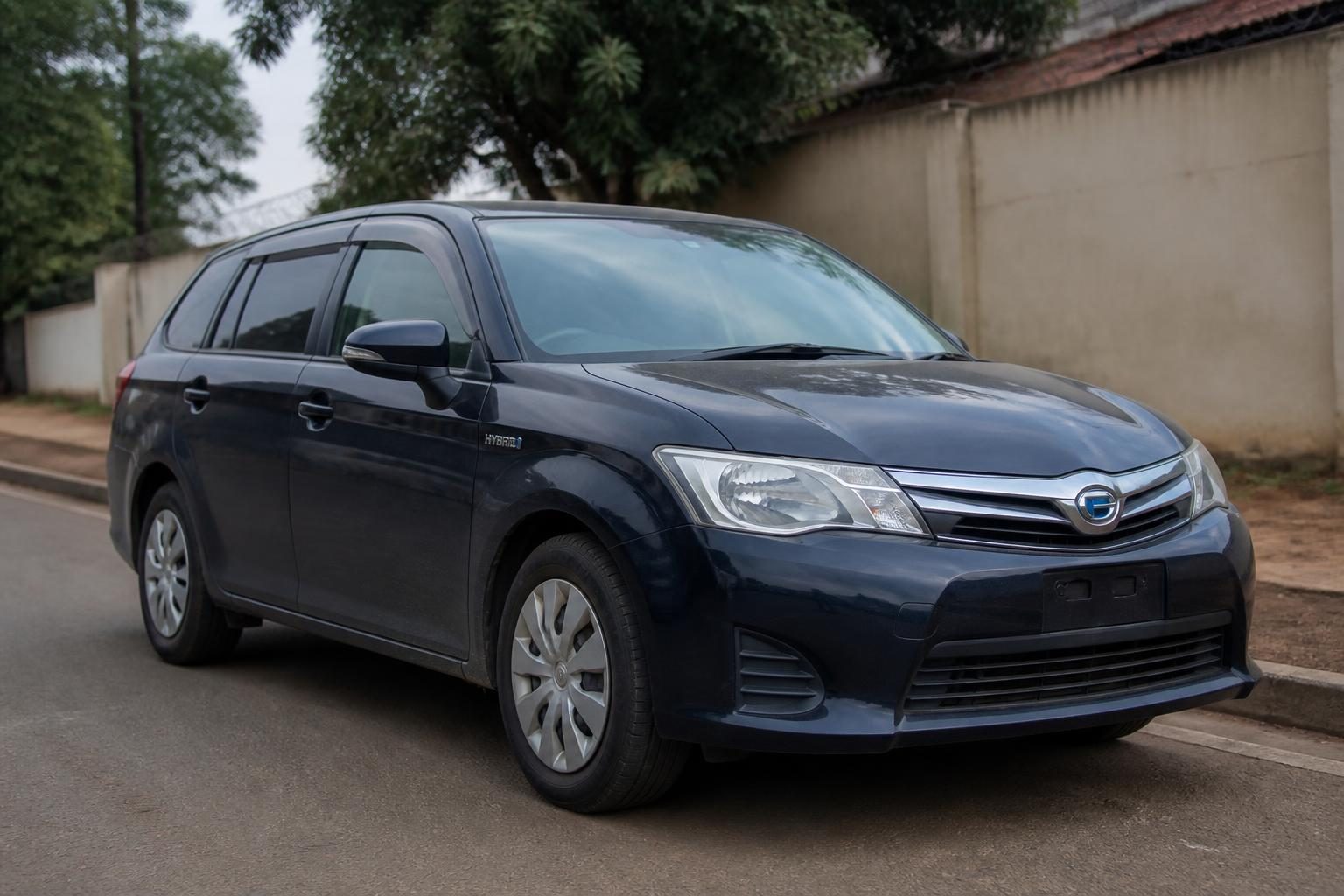 2014 Toyota Corolla Fielder
The 2026 stock record identifies an NKE165G, grade 4, five-seat hybrid with 107,000 kilometres. Toyota’s original figure for the 2014 hybrid was 33.0 km/L JC08; a later specification lists 27.8 km/L WLTC, including 24.6 km/L in the city cycle, and about 155 mm clearance (Toyota Corolla Fielder specifications, 2024–2025). These test cycles are not directly comparable. It remains a 2WD passenger wagon, not a rough-road specialist.
3. Toyota Aqua, best compact city hybrid
The 2022 Toyota Aqua is easy to manoeuvre and park in Juba. It suits individual drivers, small families and urban delivery work where low fuel use matters more than cargo space.
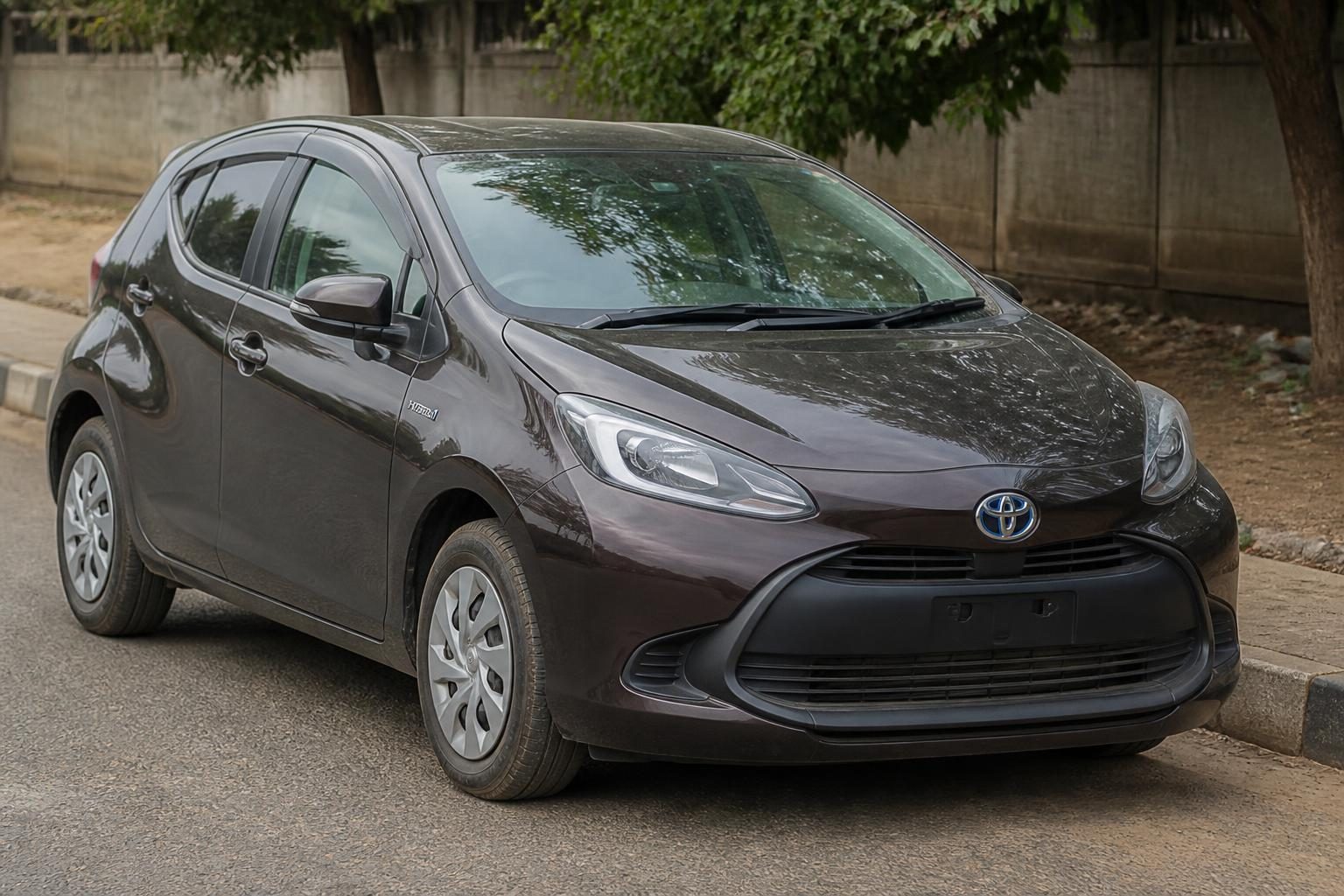 2022 Toyota Aqua
The MXPK11 stock record shows a grade 3.5, five-seat hybrid with 104,000 kilometres. Selected Aqua versions reach 34.6 km/L WLTC (Toyota Aqua specifications, 2025). Its approximately 140 mm clearance and smaller cabin make it a poor fit for heavy loads or frequent rough-road travel.
4. Honda Fit Hybrid, best flexible small car
The 2018 Honda Fit Hybrid combines compact dimensions with a flexible rear-seat layout. That makes it useful for shopping, passengers and light cargo while keeping city driving simple.
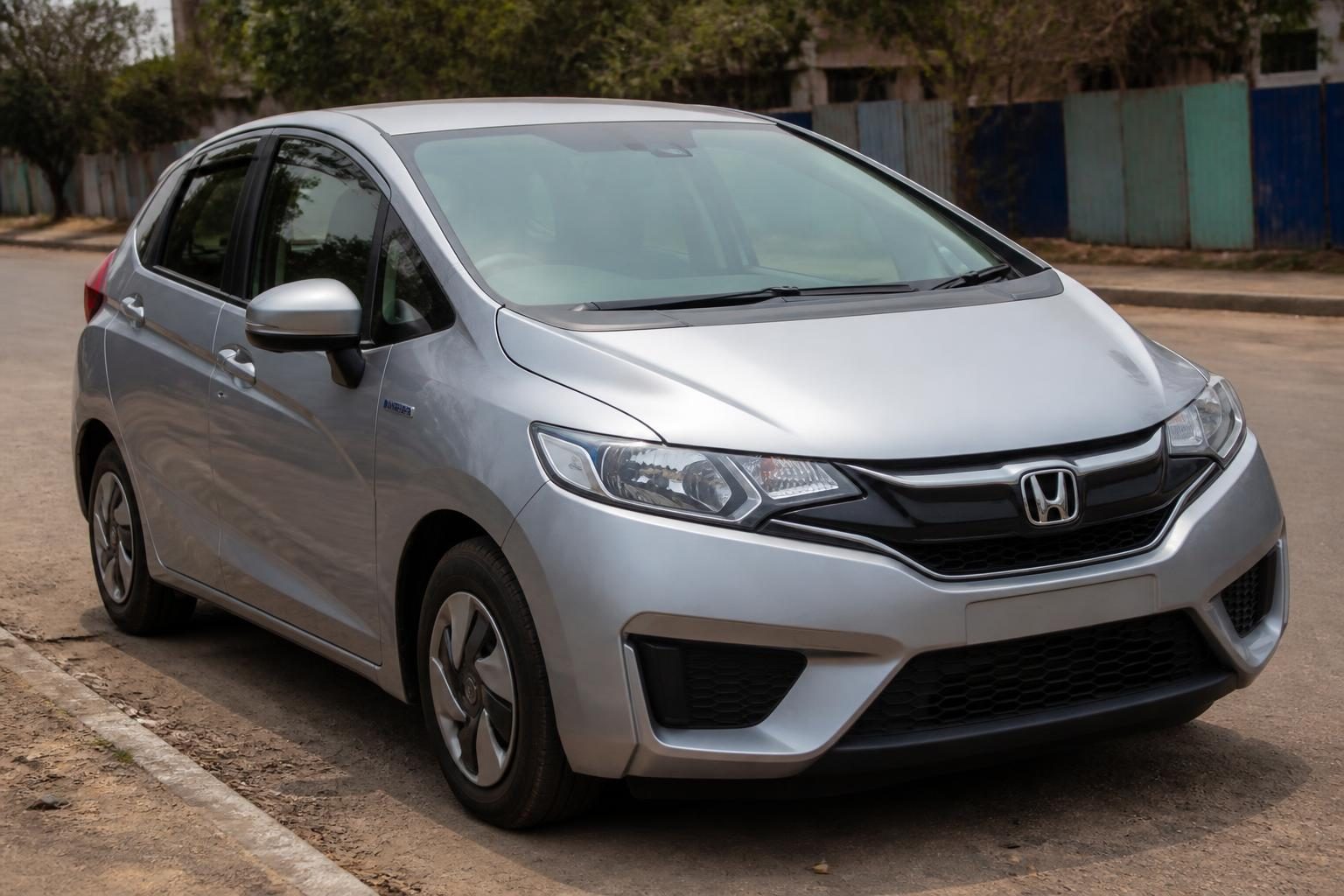 2018 Honda Fit
The GP5 stock record shows a grade 3.5, five-door, five-seat hybrid with 109,000 kilometres. Honda’s current e:HEV HOME FF records about 29.0 km/L WLTC, but that figure must not be applied to this older generation (Honda Fit performance specifications, no current figure applied to this 2018 GP5). Confirm the exact system before buying.
5. Toyota Sienta Hybrid, best compact family people-mover
The 2016 Toyota Sienta Hybrid makes sense for families needing more seats without choosing a large van. Its compact body remains manageable in town, while the seven-seat layout adds useful flexibility.
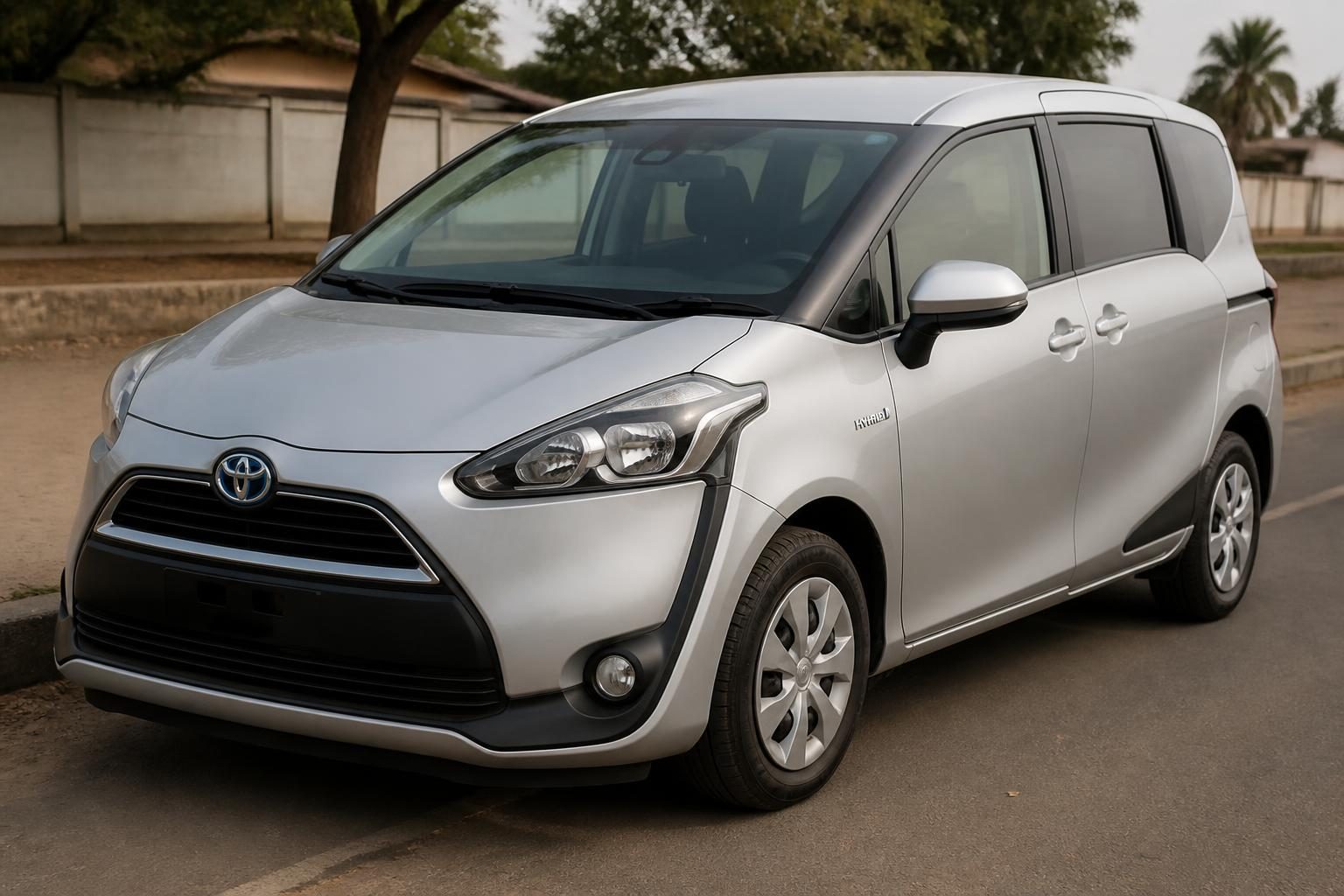 2016 Toyota Sienta
The NHP170G stock record identifies a grade 4, seven-seat hybrid with 96,000 kilometres. Toyota’s original figure for the 2016 hybrid was 27.2 km/L JC08 (Toyota Sienta specifications, exact 2016 grade and test figure to be verified before publication). Do not substitute newer Sienta WLTC figures for this older vehicle. Inspect the battery ventilation, brakes, rear suspension and sliding doors.
6. Toyota Corolla Axio Hybrid, best compact sedan
The 2015 Toyota Corolla Axio Hybrid suits buyers who prefer a compact sedan and separate boot. It is practical for Juba commuting and moderate highway travel, with dimensions that are easy to manage.
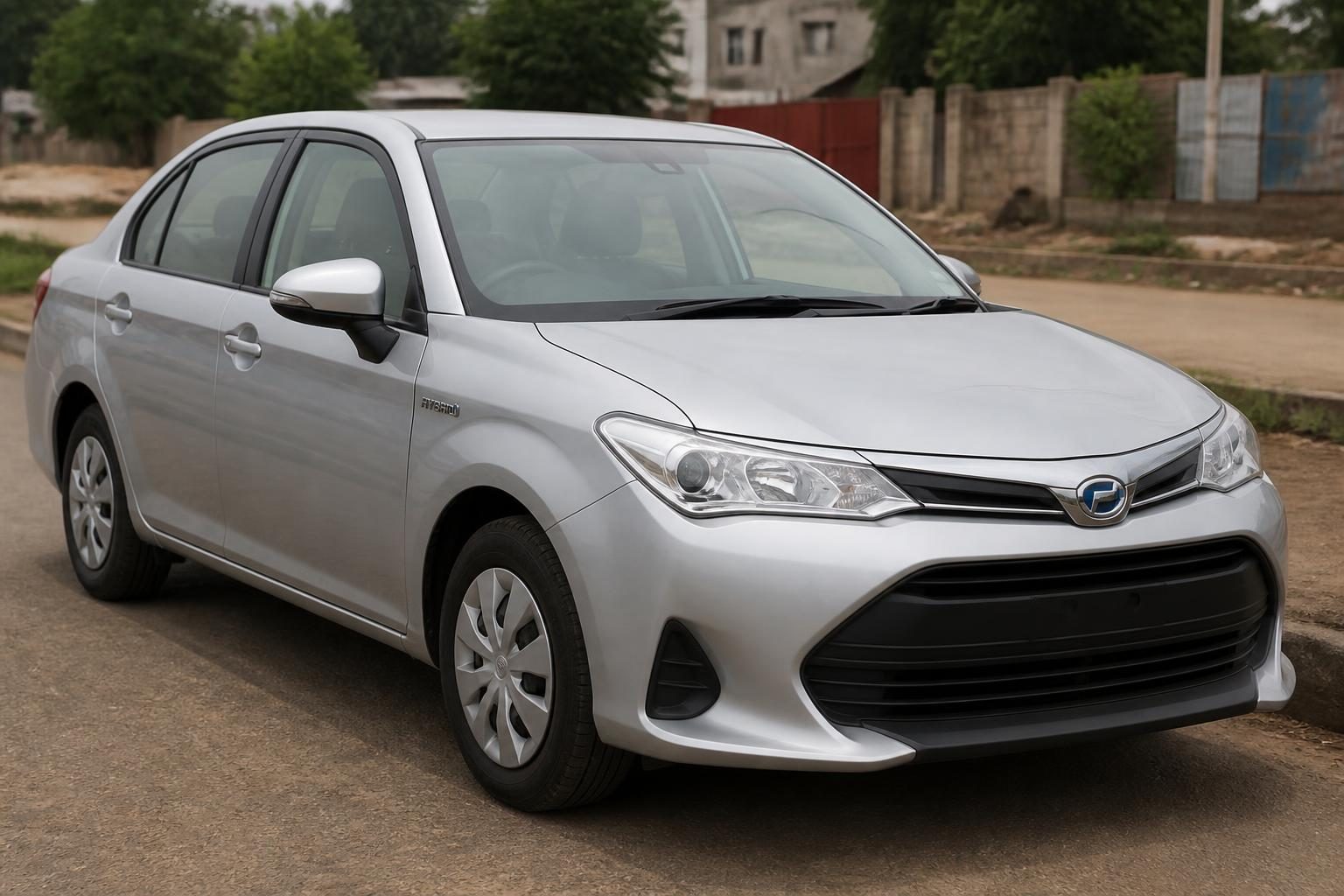 2015 Toyota Corolla Axio
The NKE165 stock record shows a grade 4, five-seat hybrid with a low recorded odometer reading. Toyota’s original catalogue figure for the 2015 hybrid was about 33.8 km/L JC08; a later specification lists 27.8 km/L WLTC and about 155 mm clearance (Toyota Corolla Axio specifications, 2021). These test cycles are not directly comparable. Battery age still matters despite the low odometer reading.
7. Nissan Note e-POWER, best without external charging
The 2021 Nissan Note e-POWER provides an electric-motor driving feel while still using petrol. It can suit stop-start city work, but its technology differs from Toyota’s conventional hybrid system.
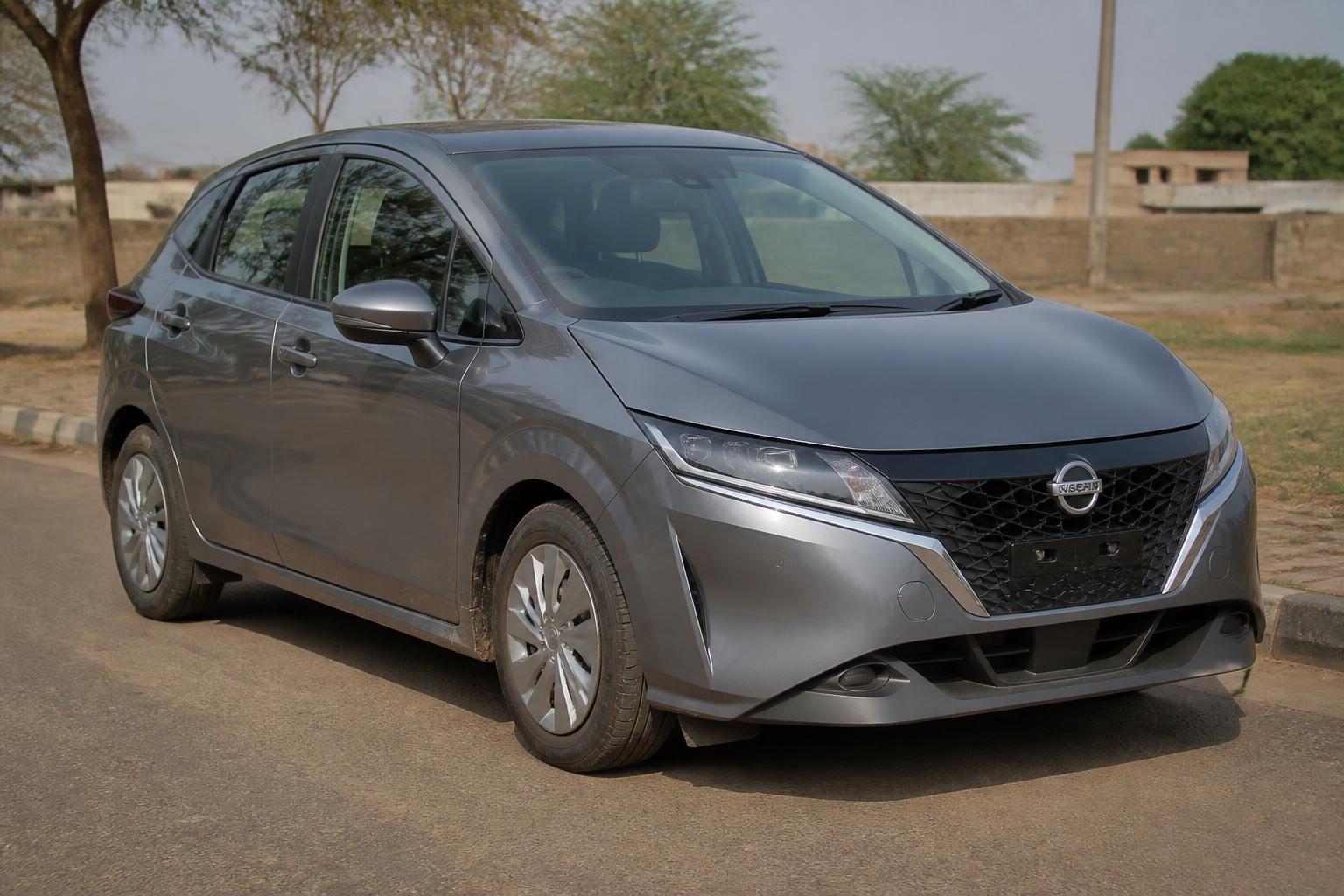 2021 Nissan Note
The E13 stock record shows a grade 4, five-seat hybrid with 105,200 kilometres. Nissan lists 28.4 km/L WLTC for the relevant 2WD version (Nissan Note specifications, 2026). Confirm diagnostic support and compatible parts before choosing it for routes far from Juba.
8. Toyota Yaris Hybrid, best official economy
The 2021 Toyota Yaris Hybrid is highly suitable for buyers who prioritise fuel economy, easy parking and urban driving. Its small footprint works well in Juba, especially for one or two occupants.
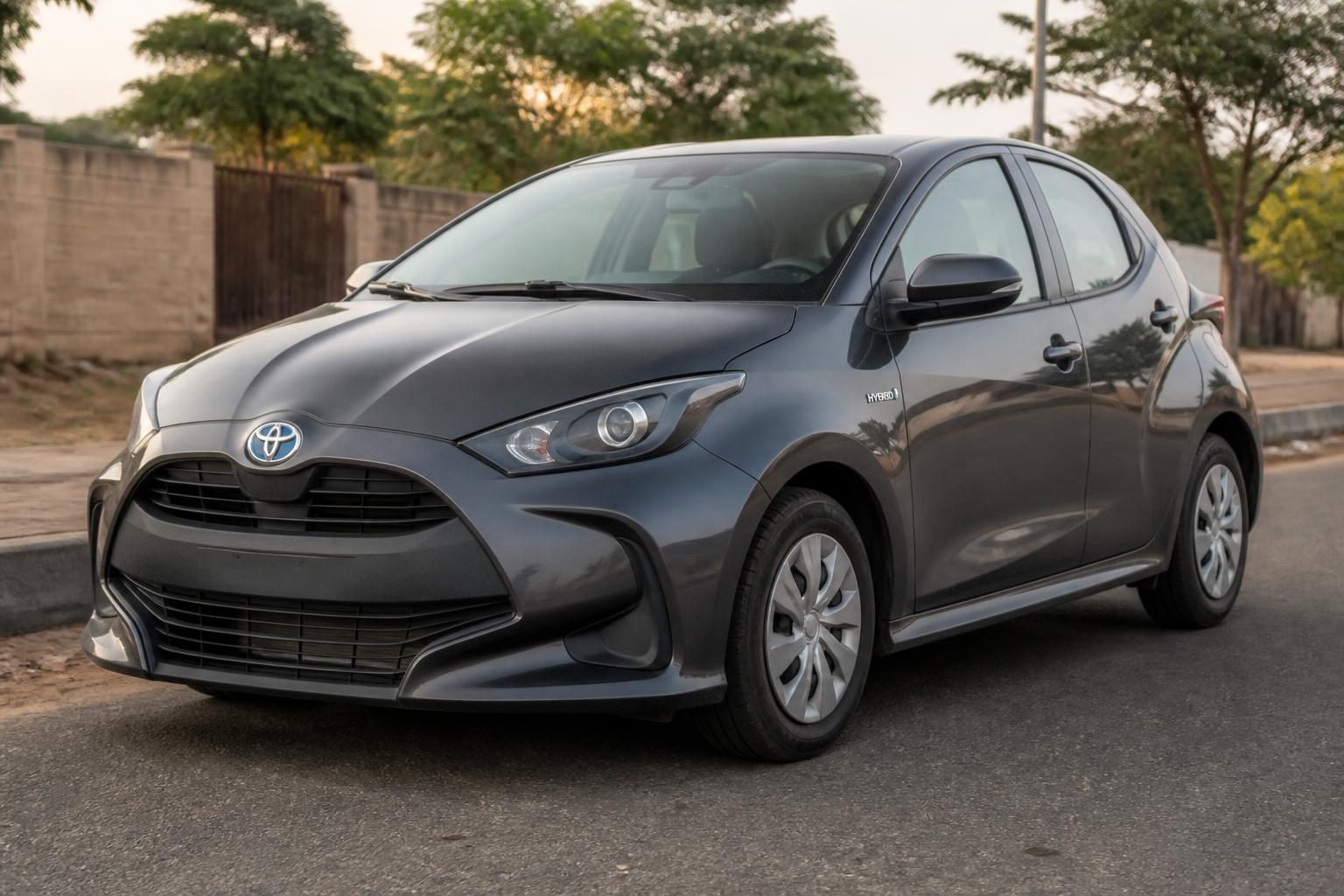 2021 Toyota Yaris
The MXPH10 stock record shows a grade 3.5, five-seat hybrid with 110,967 kilometres. Selected 2WD variants reach 36.0 km/L WLTC, while this hybrid’s clearance is about 145 mm (Toyota Yaris specifications, 2026). Limited space and low stance make it unsuitable for severe tracks.
9. Honda Shuttle Hybrid, best older cargo wagon
The 2019 Honda Shuttle Hybrid offers useful cargo length for families and small businesses. Its long-roof layout can carry equipment without the size of a larger MPV.
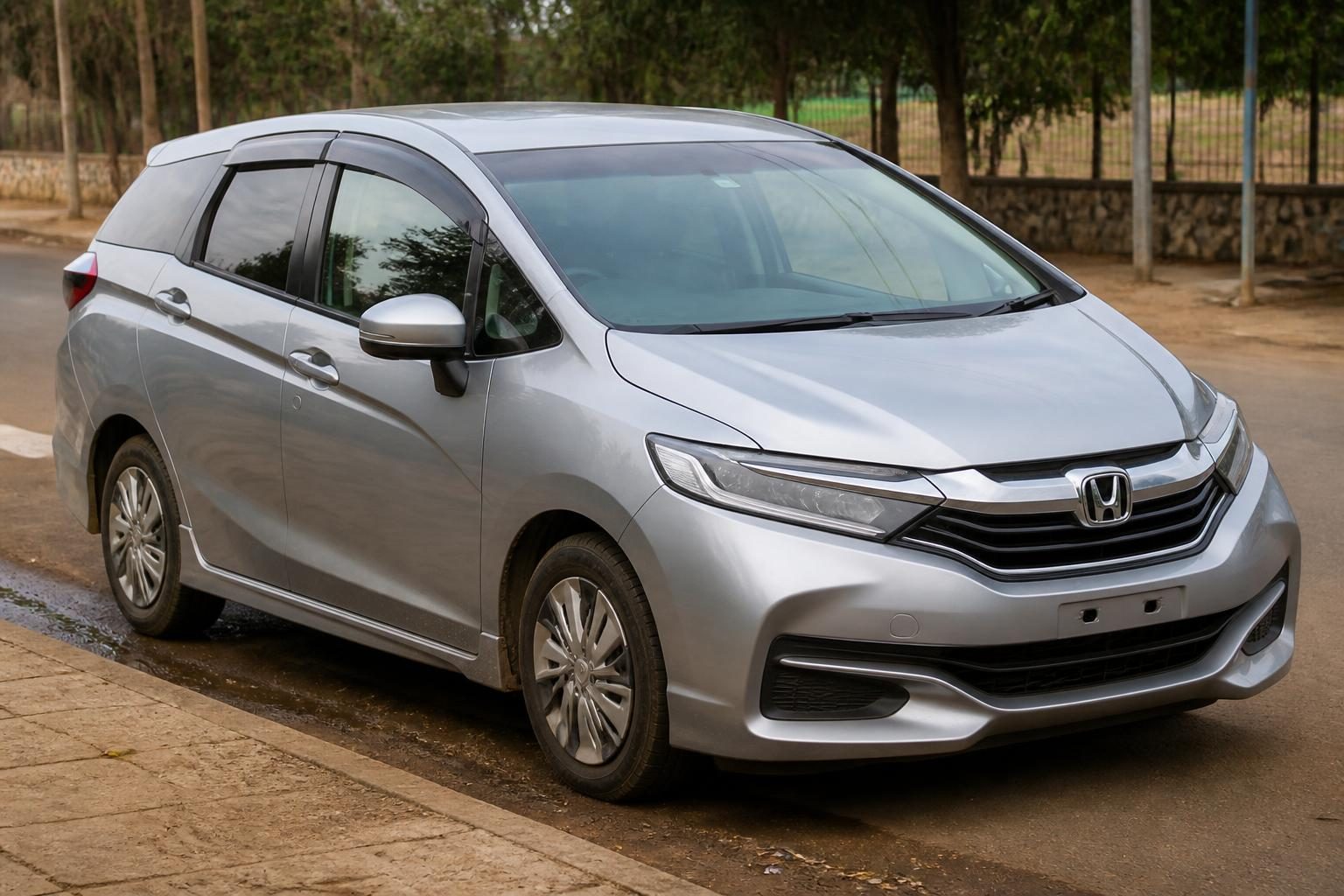 2019 Honda Shuttle
The stock record shows a grade 3.5 hybrid with 131,000 kilometres, although the model code and seating fields were not returned. Honda’s archived front-wheel-drive specification records 25.2 km/L WLTC (Honda Shuttle specifications, 2022). Its approximately 130 mm clearance and discontinued status demand strict inspection.
10. Toyota Noah Hybrid, best for seven-seat transport
The 2024 Toyota Noah Hybrid is the strongest choice here for larger families, group travel and shuttle work. Its seven-seat layout offers much more cabin space than the Aqua, Yaris or Prius.
The ZWR90W stock record shows a grade 3.5, seven-seat hybrid with 26,000 kilometres. The cited Toyota document covers a 2026 Wel Join configuration, not necessarily this standard 2024 vehicle, so verify the exact grade, seating configuration and drivetrain before quoting a fuel figure (Toyota Noah specifications, exact 2024 grade and drivetrain to be verified before publication). Its size, weight and clearance reduce its rough-road versatility.
What Do Japanese Hybrid Fuel Figures Really Mean?
Official Japanese figures help compare vehicles, but they cannot guarantee consumption in South Sudan. In 2026, selected Yaris variants record 36.0 km/L WLTC, while Noah figures vary by grade, seating configuration, drivetrain and model year (Toyota Yaris specifications, 2026; Toyota Noah specifications, exact 2024 grade and drivetrain to be verified before publication).
| Model |
Official Japanese figure |
| Toyota Yaris Hybrid |
Up to 36.0 km/L WLTC |
| Toyota Aqua |
Up to 34.6 km/L WLTC |
| Toyota Prius Hybrid |
37.2 km/L JC08 for most 2WD grades |
| Honda Fit e:HEV HOME FF |
About 29.0 km/L WLTC |
| Toyota Corolla Fielder Hybrid |
33.0 km/L JC08 for the 2014 hybrid |
| Toyota Noah Hybrid |
Grade-specific; verify the exact 2024 figure |
WLTC is a controlled test cycle. JC08 is an older Japanese cycle, so the two figures should not be compared directly. Air-conditioning, payload, tyre pressure, speed, road surface and maintenance will change your results.
Are Hybrid Cars Reliable on South Sudan Roads?
A well-inspected hybrid can be dependable, but the battery and the rest of the vehicle need separate checks. In 2026, the shortlist includes records from 23,000 to 131,000 kilometres, making age, use and condition more useful than the badge alone.
Inspect the battery cooling fan, air intake, warning lights, inverter, 12-volt battery and petrol engine. Check oil leaks, coolant, air-conditioning, tyres, suspension, brakes and underbody damage. NHTSA says extreme temperatures and other operating factors can affect battery performance and life (NHTSA Electric and Hybrid Vehicle Guidance).
An auction grade helps describe overall condition, but it does not replace a detailed inspection report. A car that saves fuel can still become poor value if its suspension, cooling system or tyres need early replacement.
Hybrid Buyer-Fit Guide
Your daily route should decide the shortlist more than the highest fuel number. In 2026, selected Yaris variants reach up to 36.0 km/L WLTC, while Noah figures vary by grade, seating configuration, drivetrain and model year (Toyota Yaris specifications, 2026; Toyota Noah specifications, 2026).
| If you mainly need |
Start with |
Watch out for |
| Juba traffic and low fuel use |
Aqua, Yaris or Fit |
Low clearance and limited cargo |
| A balanced family car |
Prius, Fielder or Sienta |
Condition and seating layout |
| Cargo for business use |
Fielder or Shuttle |
Rear suspension and cargo wear |
| Seven seats |
Sienta or Noah |
Weight, size and running costs |
| Paved inter-town travel |
Prius or Fielder |
Tyres, cooling and underbody |
| Severe rough-road travel |
Consider a higher-clearance vehicle first |
A low hybrid may be poor value |
If your route includes deep ruts, prolonged rainy-season mud or poorly maintained tracks, a higher-clearance non-hybrid may suit you better.
How Does Importing a Hybrid from Japan to South Sudan Work?
Japan-to-Mombasa vessel transport is estimated at about 24–36 days in 2026, followed by road transport into South Sudan (South Sudan import process guidance, 2026). Weekly departures can help with planning, but the full journey remains an estimate.
Carbarn owns and inspects its listed vehicles in Japan, provides the official Japanese auction sheet and an in-house inspection report before payment, and describes an EAA pre-shipment inspection for South Sudan, subject to current confirmation. Shipping uses RoRo vessels through MSC to Mombasa. The dashboard supports invoices, bills of lading, certificates and vessel tracking, while payment is arranged by bank transfer or card through the proforma invoice. The vehicle-and-shipping price is not the full landed cost. Customs charges, any applicable VAT or sales tax, customs clearance, possible EAA arrival inspection depending on the region, registration and licensing remain separate. Confirm the current rate, assessment base and any destination-specific treatment with the South Sudan Revenue Authority or current tariff book. Read the South Sudan vehicle import rules before making a decision.