Most Fuel-Efficient Japanese Cars in South Sudan for 2026
Most Fuel-Efficient Japanese Cars in South Sudan for 2026
Read Our Blogs today and Learn More
Loading ...
Frequently Asked Questions (FAQs)
The Toyota Yaris Hybrid leads this shortlist at up to 36.0km/L WLTC, according to Toyota’s 2026 Yaris specification sheet. The Toyota Aqua reaches up to 34.6km/L WLTC in the cited April 2024 sheet. Exact results depend on grade, drivetrain, tyres and equipment, and neither figure promises local consumption.
They can suit urban driving, particularly where traffic is stop-start. Toyota’s Yaris figure reaches 36.0km/L WLTC, but buyers should check battery condition, inspection records, technician knowledge, road conditions and passenger loads. A petrol model with easier servicing may suit a remote route better than a more efficient hybrid.
The Aqua may suit maintained urban roads, but Toyota lists approximately 140mm of 2WD clearance for the cited specification. Its compact body can also limit heavy-load comfort. Check the route, tyres, underbody condition and passenger needs before choosing it for gravel roads or rainy-season travel.
Check ground clearance, drivetrain condition, auction grade, odometer, repair history, tyre condition, parts access and passenger requirements. Also compare the full landed-cost breakdown. Duty can vary by vehicle specification and destination town, while the vehicle and shipping price does not automatically cover VAT, clearance, registration or licensing.
I am a Turkish-Australian automotive writer with a passion for hybrid vehicles and rugged 4WD adventures. My writing combines detailed technical insights with a love for outdoor exploration and Aussie driving culture. Having guest posted for leading automotive sites, my mission is to educate and inspire drivers considering greener and tougher vehicle options.
Fuel costs matter when you are choosing an imported car, but the smallest number in a brochure does not settle the decision. A compact hatchback may use very little fuel while offering less clearance, space and protection from rough roads.
South Sudanese buyers also need to consider passenger loads, air-conditioning, tyres, servicing and the distance between towns. This guide compares six Japanese hybrids using published Japanese-market figures, labelled by model generation and test cycle, then adds the road and ownership context those figures cannot show.
Toyota’s newer Aqua specification lists up to 34.6km/L WLTC in the cited April 2024 document, but that figure does not describe the 2019 NHP10 example below.
The Honda Fit e:HEV offers the strongest balance of compact size, economy and flexible five-seat space.
The Toyota Sienta Hybrid is the more practical choice for families needing up to seven seats.
Low fuel consumption does not make a low-clearance hatchback suitable for every South Sudan route.
WLTC is a Japanese fuel-economy test cycle combining city, suburban and motorway-style driving. It helps compare vehicles tested under the same method, but it cannot predict exact consumption on South Sudanese roads.
WLTC figures are controlled results. Rough surfaces, heavy loads, hot weather, constant air-conditioning, tyre condition and driving style can all change the result. Hybrids often perform well in stop-start traffic because they can recover energy while slowing.
JC08 is an older Japanese fuel-economy test cycle. Do not mix its results with WLTC figures, because a higher JC08 number may not represent better real-world economy than a lower WLTC result.
Published WLTC figures
Model
Maximum published figure
Test cycle
Toyota Yaris Hybrid
36.0km/L
WLTC
Toyota Aqua
34.6km/L
WLTC
Honda Fit e:HEV
30.2km/L
WLTC
Nissan Note e-POWER E13
28.4km/L
WLTC
Published JC08 figures
Model
Published figure
Test cycle
2019 Toyota Aqua NHP10
34.4km/L
JC08
2016 Toyota Prius ZVW50
About 37.2–40.8km/L
JC08
2016 Toyota Sienta NHP170G
27.2km/L
JC08
2017 Nissan Note HE12 e-POWER X
34.0km/L
Older Japanese cycle
The useful question is not simply, “Which car uses the least fuel?” What route will it use, how many people will it carry, and who can service its drivetrain?
WLTC is a controlled Japanese fuel-economy test covering city, suburban and motorway-style driving. It supports fair model comparisons, but local road surfaces, heat, loads and air-conditioning can produce different results.
Which Japanese Car Has the Lowest Fuel Consumption?
Toyota’s 2026 Yaris Japanese specification sheet lists up to 36.0km/L WLTC for a selected grade. That is the highest published WLTC figure in this comparison, not a definitive ranking of the older used examples, whose official figures use different model generations and, in several cases, the JC08 cycle.
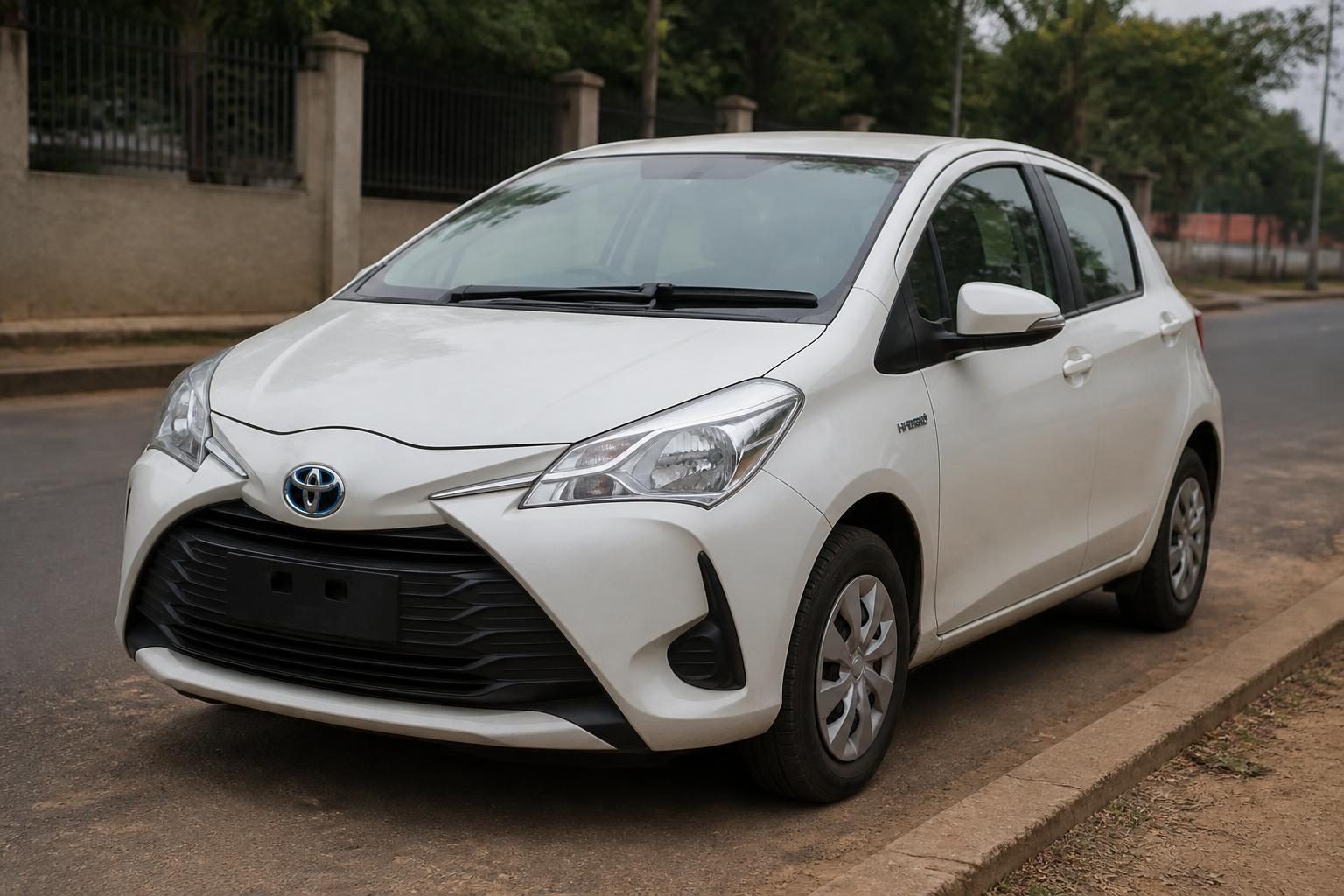
Toyota Yaris Hybrid
The Toyota Yaris Hybrid is a compact petrol-electric hybrid aimed at urban driving. Toyota’s 2026 specification sheet lists a 3,950mm body length and up to 36.0km/L WLTC for a selected grade.
The Yaris has five seats and approximately 145mm of 2WD ground clearance. Some E-Four versions list about 160mm. E-Four is Toyota’s electronically controlled all-wheel-drive system, used on selected hybrid grades. The manufacturer figures apply to the cited current specification, not necessarily every used listing.
Its small boot and low hatchback stance mean it is better for light loads and maintained roads than frequent rough-road travel.
Toyota Yaris Hybrid
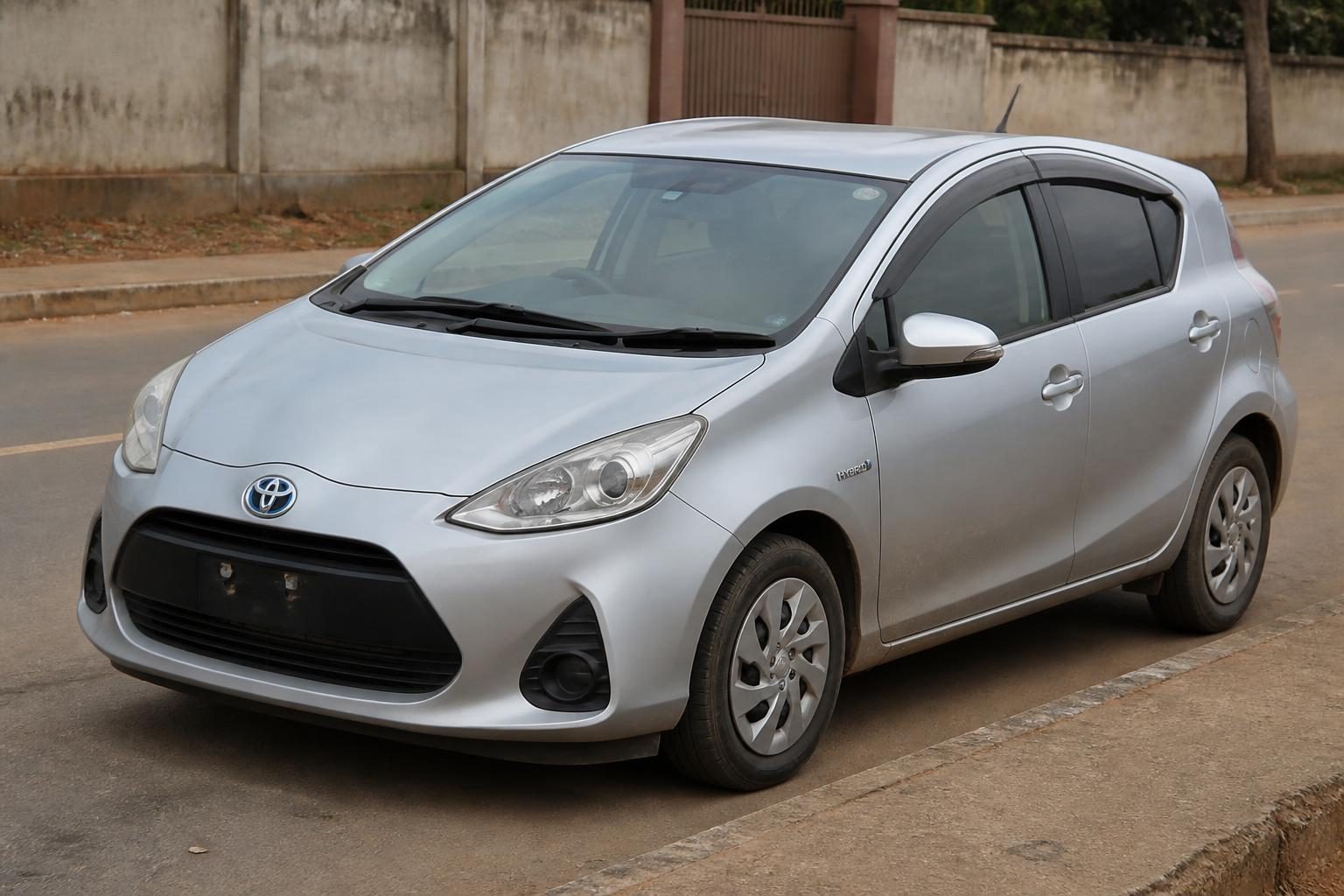
Toyota Aqua
The Toyota Aqua is another five-seat petrol-electric hybrid with a strong urban focus. In 2024, Toyota’s Aqua specification sheet listed up to 34.6km/L WLTC for the cited 2WD specification.
The 2019 NHP10 example used for this comparison has 77,000km, auction grade 4 and five seats. Its approximately 140mm 2WD clearance and compact cabin make it a sensible city car, but not a strong choice for heavy loads or badly maintained routes.
2019 Toyota Aqua
The Toyota Yaris Hybrid leads this shortlist at up to 36.0km/L WLTC in a selected Japanese-market grade, according to Toyota’s 2026 specification sheet. Its compact 3,950mm body helps urban manoeuvrability, but modest ground clearance means fuel efficiency should not be confused with rough-road ability.
Is the Toyota Prius Practical for South Sudan?
Toyota’s official Prius model page describes a newer 1.8-litre hybrid specification. The 2016 example below belongs to an older generation with JC08 figures. The Prius offers more cabin and boot space than the smallest hatchbacks, so it can suit longer trips and larger everyday loads.
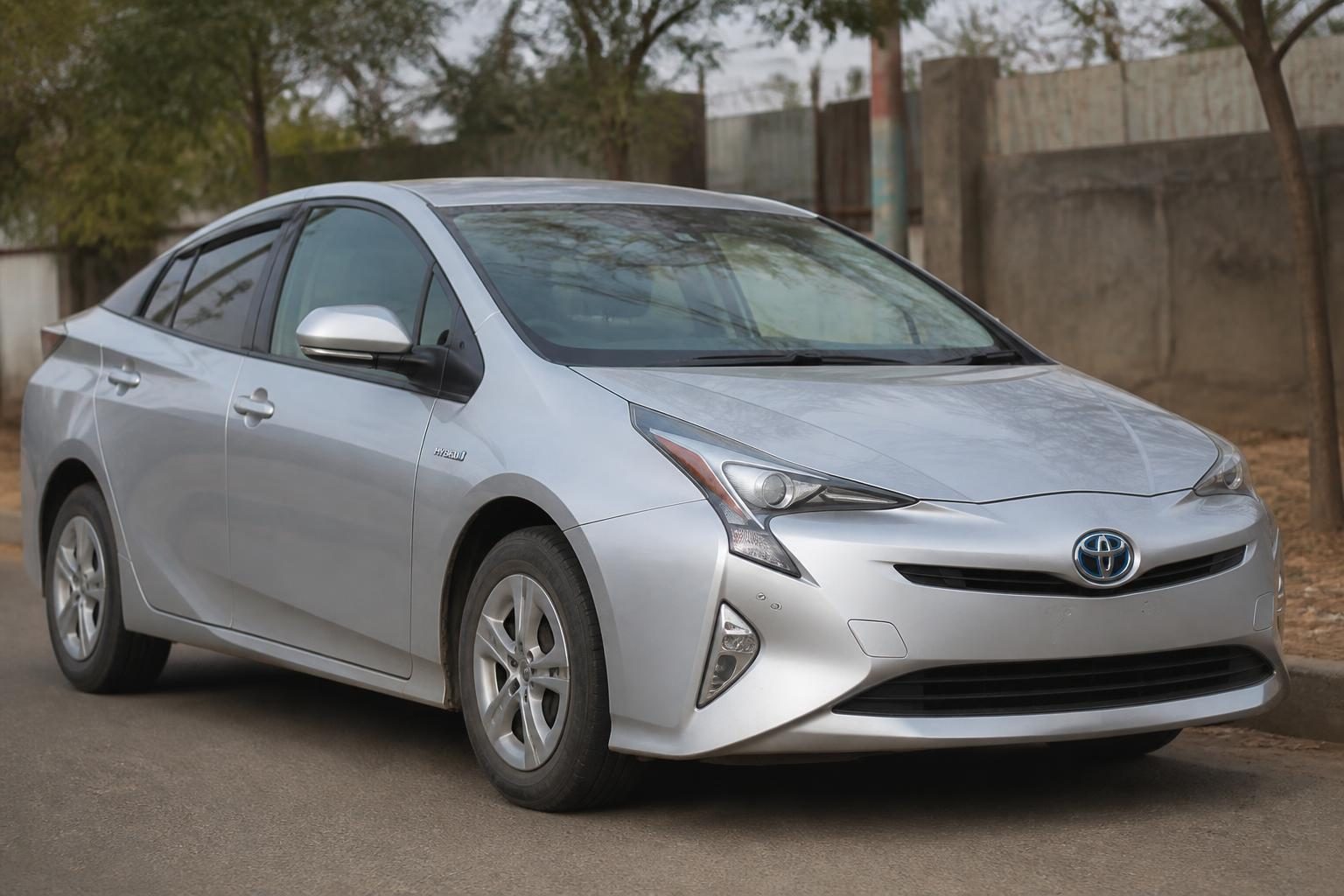
Toyota Prius
The Toyota Prius combines a petrol engine with Toyota’s hybrid drive system and five-seat space. It is a stronger choice than the Aqua when you want a more substantial cabin without abandoning low fuel consumption.
The 2016 ZVW50 example has 130,000km and auction grade 4. Toyota’s older specification lists approximately 130mm of 2WD clearance or 135mm for E-Four, depending on specification (Toyota Prius 2015 specification sheet, 2015). Battery condition, auction history, underbody condition and inspection records deserve close attention before choosing one.
2016 Toyota Prius
The Prius may be poor value for a buyer who wants the simplest possible servicing or regularly travels over rough roads. Its efficiency is useful, but its lower body still needs route planning.
Toyota’s newer 1.8-litre Prius specification offers a useful comparison with the older JC08 figures in this guide. The Prius trades some peak economy for more cabin and boot space, but its low body and hybrid condition make inspection history as important as the headline fuel figure.
Fuel-Efficient Cars for Families
The Honda Fit e:HEV and Toyota Sienta address different family needs. Honda lists the Fit at up to 30.2km/L WLTC in the Basic FF grade, while Toyota’s older Sienta specification uses the JC08 cycle (Honda Fit fuel economy and specifications, 2026; Toyota environmental specification, 2015). The Fit prioritises compact flexibility, while the Sienta prioritises passenger capacity.
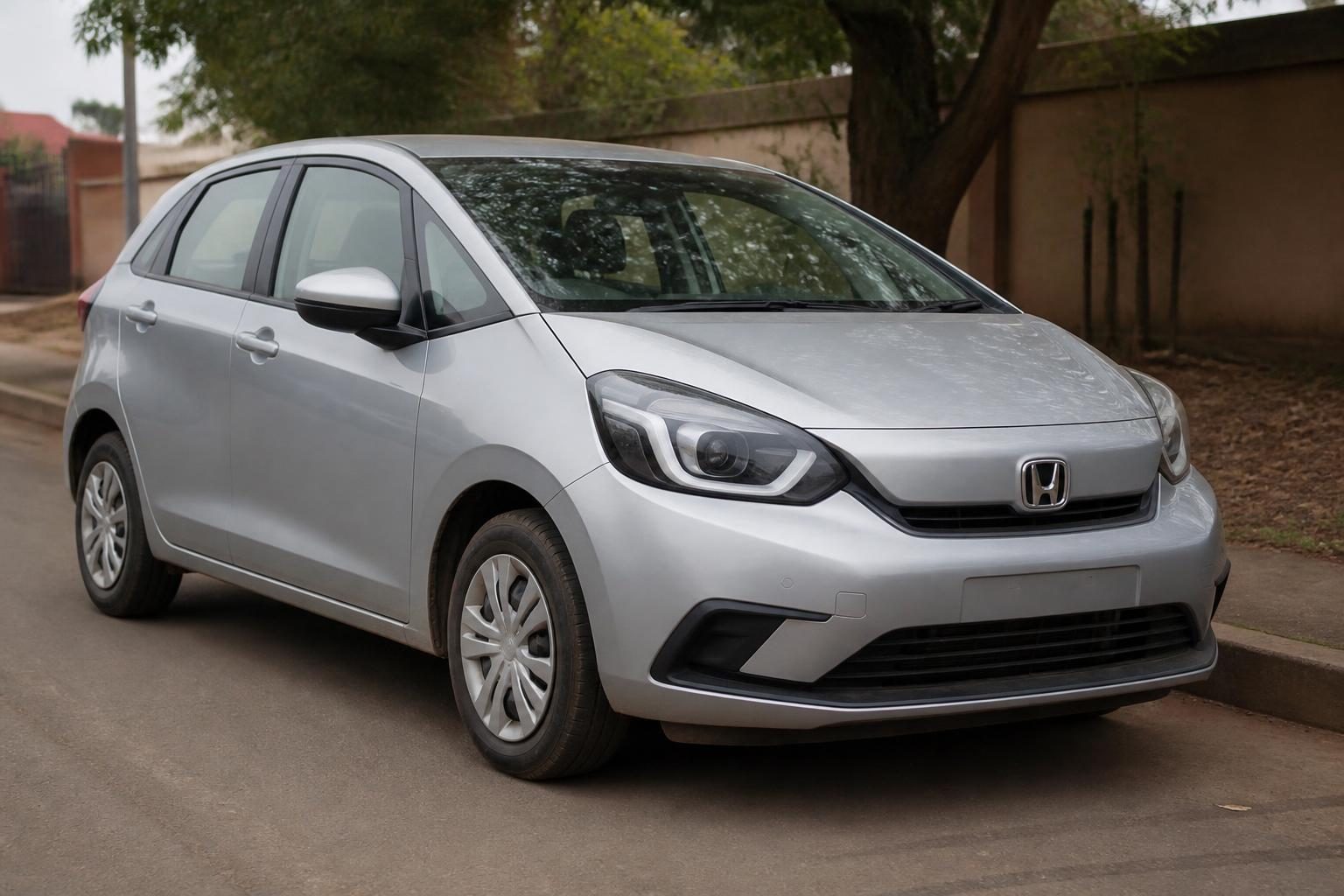
Honda Fit e:HEV
The Honda Fit Hybrid is a five-seat petrol-electric hatchback with a more flexible interior than the smallest cars here. Honda’s official figures vary from about 28.4 to 30.2km/L WLTC, depending on grade and drivetrain.
The 2021 GR3 example has 49,000km and auction grade 4. Honda lists up to 30.2km/L WLTC for the e:HEV Basic FF, while other grades and 4WD versions return lower figures (Honda Fit fuel economy and specifications, 2026). The cited comparison lists about 135mm of FF ground clearance, or 150mm for some four-wheel-drive versions. It suits small families, but buyers should confirm the exact grade and local servicing knowledge.
2021 Honda Fit
Toyota Sienta Hybrid
The Toyota Sienta is a petrol-electric people-mover available in five- and seven-seat layouts. It cannot match the Yaris or Aqua on fuel consumption, but sliding-door access and extra seating make family travel easier.
The 2016 NHP170G example is a seven-seat wagon with 96,000km and auction grade 4. Toyota’s older specification lists about 145mm of ground clearance and 27.2km/L under the JC08 cycle (Toyota environmental specification, 2015; Toyota specification sheet, 2015). It may be the better economic choice when it prevents overloading a small hatchback.
2016 Toyota Sienta
Published economy and seating
The figures below keep each model’s test cycle visible. The Sienta shows why a lower published economy figure can still make sense when you need more passenger space.
Model
Maximum published economy
Test cycle
Seating
Toyota Yaris Hybrid
36.0km/L
WLTC
5
Toyota Aqua
34.6km/L
WLTC
5
Honda Fit e:HEV
30.2km/L
WLTC
5
Toyota Sienta Hybrid
27.2km/L
JC08
6 or 7
The Honda Fit e:HEV and Toyota Sienta serve different family needs. Honda lists the Fit at up to 30.2km/L WLTC in one Basic FF grade, while Toyota’s older Sienta specification uses the JC08 cycle. The Sienta may still be the better family purchase when seven seats prevent overloading.
Is the Nissan Note e-POWER a Good Economical Choice?
Nissan’s newer E13 Note e-POWER specification lists 28.4km/L WLTC for the relevant 2WD version, but that figure does not describe the 2017 HE12 example below (Nissan, 2026). The Note suits stop-start urban driving, but its value depends on whether suitable diagnostic equipment, parts and technical knowledge are available.
Nissan Note e-POWER
The Nissan Note e-POWER uses a petrol engine to generate electricity while an electric motor drives the wheels. e-POWER is Nissan’s system in which the petrol engine generates electricity while the electric motor drives the wheels. That layout can provide smooth, responsive acceleration around town without making the car large.
The 2017 HE12 example has 69,950km, five doors, five seats and auction grade 3.5. Nissan’s older specification gives different figures from the newer E13 WLTC data; the e-POWER X is listed at 34.0km/L under the older Japanese test cycle (Nissan Note E12 specification sheet, 2016). Confirm local diagnostic support before choosing it for distant routes.
2017 Nissan Note
Nissan’s newer E13 Note e-POWER specification reaches 28.4km/L WLTC, but that figure does not describe the 2017 HE12 example. The system uses a petrol engine for electricity and an electric motor for propulsion, making it appealing in town, but buyers should confirm diagnostic capability and technician familiarity first.
What Matters More Than the Fuel-Economy Number?
Toyota’s Corolla Fielder Hybrid specification lists 24.6km/L WLTC and 155mm of ground clearance. That lower fuel figure can still appeal to buyers who need more usable cargo space and a little more clearance than compact hatchbacks provide (Toyota Corolla Fielder specifications, 2019).
[UNIQUE INSIGHT] The most fuel-efficient car is not necessarily the lowest-cost car to own. South Sudan’s limited paved-road network, ruts and rainy-season access problems make underbody condition, tyres and route suitability part of the ownership calculation.
Check these points before ordering:
Ground clearance and underbody condition, especially for potholes and gravel.
Tyre tread, age and suitability for the roads you will use.
Passenger and cargo loads, which can strain a small car.
Air-conditioning use in hot conditions.
Hybrid battery condition and inspection records.
Parts access and technician familiarity with the drivetrain.
Your main route, including whether you travel beyond maintained urban roads.
Destination town, because duty and clearance treatment can vary between Juba, Yei and Nimule.
A low-clearance hatchback can look attractive on fuel and price. The harder question is whether it will remain comfortable and protected when carrying people over potholes, gravel and rainy-season sections.
How Should You Compare Japanese Cars for South Sudan?
A Japan-to-Mombasa sea journey takes about 24 to 36 days, followed by road transport into South Sudan (South Sudan import rules and costs). A realistic comparison therefore needs inspection records, shipping terms, destination costs and route suitability, not just a vehicle’s Japanese fuel figure.
A transparent import process should provide the auction sheet, an in-house inspection report, pre-shipment checks, a proforma invoice and clear documents for the journey. Buyers should also confirm whether the quoted amount covers only the vehicle and shipping.
Landed-cost checklist
Landed cost means the total amount after shipping and applicable import, clearance and registration expenses. Compare the vehicle and shipping amount with VAT, customs duty, clearance, arrival inspection, registration and licensing. VAT is 20% of the dutiable value under Carbarn’s published import rules, while customs duty varies with the vehicle specification and destination town, including Juba, Yei and Nimule. No single duty figure is reliable for every route.
For a managed route, Carbarn South Sudan directly owns and inspects each vehicle, provides the official Japanese auction sheet and in-house inspection report before payment, and includes mandatory JEVIC pre-shipment inspection. Vehicles depart weekly through MSC by RoRo to Mombasa, then travel by road into South Sudan, with dashboard access to invoices, bill of lading, certificates and vessel tracking. Duty, VAT, customs clearance, registration and licensing remain separate costs. Carbarn’s published rules attribute VAT at 20% of the dutiable value, while customs duty varies by vehicle specification and destination town. See how importing a car works before deciding.
Which Fuel-Efficient Japanese Car Should You Choose?
The Toyota Corolla Fielder Hybrid combines a 24.6km/L WLTC figure with 155mm of listed clearance, showing why the most practical choice may rank below smaller hybrids (Toyota Corolla Fielder specifications, 2019). Fuel economy matters, but passenger space, route conditions and servicing can matter more.
If you…
Start with…
Why
Mostly drive around Juba
Yaris Hybrid or Aqua
Strong official economy and compact size
Need a flexible five-seater
Honda Fit e:HEV
Better cabin use than the smallest hatchbacks
Carry family members regularly
Toyota Sienta Hybrid
Seven-seat practicality
Want more space for longer journeys
Toyota Prius
Larger five-seat cabin and boot
Prefer a wagon layout
Corolla Fielder Hybrid
More cargo space and 155mm clearance
Travel rough or rainy-season routes
Compare clearance and condition first
Fuel economy alone cannot settle the choice
Choose the Yaris or Aqua when urban driving and light loads dominate. Consider the Fit for flexible five-seat use, or the Sienta when family seating matters. Treat the Prius and Note as inspection- and servicing-dependent choices. Higher-clearance or simpler petrol alternatives may suit demanding routes better. Always compare the full landed cost, not just the Japanese fuel figure.



 Toyota Yaris Hybrid
 2019 Toyota Aqua
 2016 Toyota Prius
 2021 Honda Fit
 2016 Toyota Sienta
 2017 Nissan Note